
Water Filtration & Treatment
Boston Water Group was founded under the belief that a future where everyone can trust their water is fundamentally healthier than one where they can’t.
The water where you live
We know the water here.We know the water here.
Every water test conducted is anonymized and published for the benefit of the community, including the individuals, families, and businesses that call it home.
Zoom in for every town

01 · RESIDENTIAL
Well Systems
Clear, soft water at every tap in the house — no staining, no smell, no second-guessing a glass.
- Iron, manganese and sulphur handled at the point of entry
- pH correction and ultraviolet disinfection sized to your flow
- Pressure tank and well pump troubleshooting

02 · RESIDENTIAL
Whole Home Water Solutions
Softer showers, spot-free glassware, appliances that last longer, and water at the kitchen tap you would happily give a child.
- Carbon filtration for chlorine, chloramine, taste and smell
- PFAS reduction media where the readings call for it
- Sized to the house, not to a catalogue

03 · RESIDENTIAL
Water Softeners
The end of scale on the kettle, film on the shower door and a water heater working harder every year to do the same job.
- Hardness measured first, then a resin bed sized to it
- Metered regeneration — salt used on demand, not on a clock
- Scale kept out of the heater, the dishwasher and the boiler

04 · RESIDENTIAL
Drinking Water Systems
One tap in the kitchen you never have to think about — and the end of carrying cases of bottled water in from the car.
- Reverse osmosis for PFAS, arsenic, nitrate and lead
- Remineralisation so the water still tastes like water
- Filter changes tracked and carried out for you

01 · BUSINESSES
Cafés & Restaurants
Ice that comes out clear, coffee that tastes the same every service, and dish machines that last the years you paid for.
- Scale kept out of boilers, steamers and combi ovens
- Carbonator backflow protection the inspector is looking for
- Service scheduled around your trading hours

02 · BUSINESSES
Corporate Offices
Bottleless water people actually want to drink, and one fewer delivery to sign for every Tuesday morning.
- Plumbed-in coolers, filtered and sanitised on a schedule
- Backflow devices tested on the cycle the state mandates
- One invoice across every floor and every site

03 · BUSINESSES
Daycares
Massachusetts licensing asks what your water source is. This is the file that answers it before anyone asks twice.
- Private-well approval evidence for 606 CMR 7.07 renewals
- Lead sampling at the fixtures children actually drink from
- Results in writing, dated, ready for the licensor

04 · BUSINESSES
Dental Practices
Treatment water at or below 500 CFU/mL, tested per operatory, with the log to prove it on the day someone asks.
- Waterline sampling chair by chair, plus the incoming supply
- Shocking and cartridge changes on the manufacturer’s cadence
- A result log built for an inspector, not for a filing cabinet

05 · BUSINESSES
Gyms
Showers that don’t leave a film, hydration stations members prefer to the vending machine, and heaters that survive the hard water.
- Softening ahead of the water heaters and the laundry
- Filtered bottle-fill stations at the volume a gym actually uses
- Legionella risk reviewed where showers sit idle between peaks

06 · BUSINESSES
Hair & Nail Salons
Color that processes the way the manufacturer intended, and basins that rinse clean — because the water going in is the same every day.
- Hardness and iron out before they reach the shampoo bowl
- Chlorine removed so toner and gloss behave predictably
- Scale kept off the bowls, the heaters and the towels

07 · BUSINESSES
Labs, Hospitals & Clinics
Type I and Type II water your instruments can rely on, and a water management programme that stands up on survey day.
- Sterile processing and dialysis loops that hold
- Built around ASHRAE 188 water management practice
- Sampling, logging and reporting run for you

08 · BUSINESSES
Veterinary Clinics
The same waterline biofilm problem as a dental practice, on top of autoclaves, lab analysers and a boarding wing.
- Dental unit waterlines sampled and shocked
- Scale kept out of autoclaves and instrument washers
- Reagent-grade polish where the analysers need it
What we do
Water you can trust, wherever it is used
Why us
Built on a belief
Local, intimate knowledge
Eighty-five towns read, mapped and kept current. Your water already has a history, and we have taken the trouble to learn it.
Numbers led, results driven
A lab test first, with every limit printed beside every reading. Trust is built on figures, not on a sales visit.
Installation, done right
In Massachusetts this is plumbing work. A licensed plumber does it, and the paperwork is ours to carry, not yours.
Service on your terms
Twice a year or once every other — you set the pace. The people who install are the people who service.
Strengthening community knowledge
Democratizing water quality data. Every test anonymized and shared so your neighbors have a head start.
Water you can trust starts here
Contact us →The Lab
What we read, so you don’t have to
Every town on the South Shore publishes what leaves its plant. Almost nobody reads it. This is where we keep what we find — the readings, the rules as they change, and plain explanations of what any of it means at your own tap. Useful whether or not you ever call us.
Water news
What has actually changed
Each item below says plainly whether it is law, a proposal, or a reading. We would rather tell you something is unconfirmed than imply it is settled.
Massachusetts holds PFAS6 at 20 ppt
MassDEP regulates six PFAS compounds as a single summed figure, with a maximum contaminant level of 20 parts per trillion. Public systems test against it; private wells are outside it entirely.
APPLIES TO PUBLIC SYSTEMS
Well testing at the point of sale
Two bills, S.585 and H.900, would require a private well to be tested when a property changes hands. Both were filed. We have not confirmed their current status, and we will say so here until we have.
STATUS UNCONFIRMED
Duxbury’s 2025 report, read closely
Iron at 291 ppb against a 300 ppb secondary standard, and PFAS6 at 9.64 ppt against the 20 ppt limit. Both inside the line. Neither tells you what arrives at your sink after the service line and your own plumbing.
SOURCE · DUXBURY CCR 2025
Town readings
Every town publishes. Almost nobody reads it
A Consumer Confidence Report tells you what left the treatment plant, averaged over a year. It does not tell you what came through your service line, or what your own pipes added on the way to the kitchen. Those are different questions, and only one of them has a published answer.
Pick your town on the map and the chart turns over to show what the town reports, with the limit beside every figure and a link to the state’s own document search so you can check us.
What a report cannot tell you
- What your service line is made of
- What your own interior plumbing adds
- What the water does after it sits overnight
- Anything at all, if you are on a private well
Which is the whole argument for testing at the tap rather than reading a PDF.
Research library
Plain explanations, with the numbers in them
Contaminants
What PFAS6 actually means
Six compounds, summed, measured in parts per trillion — a unit most people have never had to think about. What 20 ppt is, why the six, and what removes them.
Contaminants
Iron and manganese are not the same problem
Orange staining and black specks have different causes, different secondary standards (300 ppb and 50 ppb) and different fixes. Treating them as one thing is the most common mistake we see.
Contaminants
Lead, and the 1986 line
Why the year a house was built changes the question, what a 15 ppb action level is and is not, and why the first draw of the morning is the one that matters.
Chemistry
Hardness, in numbers you can act on
Grains per gallon, what each range does to a water heater, and the point at which softening pays for itself rather than being a preference.
Treatment
Why the order matters more than the kit
pH before iron. Sediment before UV. Softening before RO. A correct list of equipment in the wrong sequence fails, and looks like a product fault.
Records
How to read your own CCR
Which columns matter, what “90th percentile” means, why an average can sit inside a limit while your street does not, and where the footnotes hide.
PROTOTYPE · TITLES SHOWN, ARTICLES TO BE WRITTEN
What to install where
Your town changes the answer
Two houses a mile apart can need completely different systems. This is the short version of how we decide — and you can run the same logic yourself.
If you are on town water
- Start with the report. It tells you what arrived at the town line.
- Then the age of the house. Pre-1986 puts lead solder and lead service lines in play, and no report covers that.
- Chlorine or chloramine is a taste and smell problem, solved with carbon at the point of entry.
- PFAS at the tap is a reverse osmosis question, not a whole-house one.
If you are on a private well
- There is no report. The test is the only record that exists.
- Test broadly the first time — bacteria, nitrate, arsenic, uranium, iron, manganese, pH and hardness.
- Expect a sequence, not a box. Most wells need three or four stages in a fixed order.
- Re-test annually. Well water changes; town water is at least monitored for you.
Reading is free. So is the advice
Contact us →Business Water Solutions
Every job starts the same way: a water test and audit. A lab conducted water test is used as the basis for our assessment, whether it is a café, a dental practice or a hospital. You get every reading in writing with the standard it is measured against beside it, a straight answer about what is worth doing, and a dated record you can hand to an inspector.
What we do
Water you can trust, wherever it is used
Start with the test
Contact us →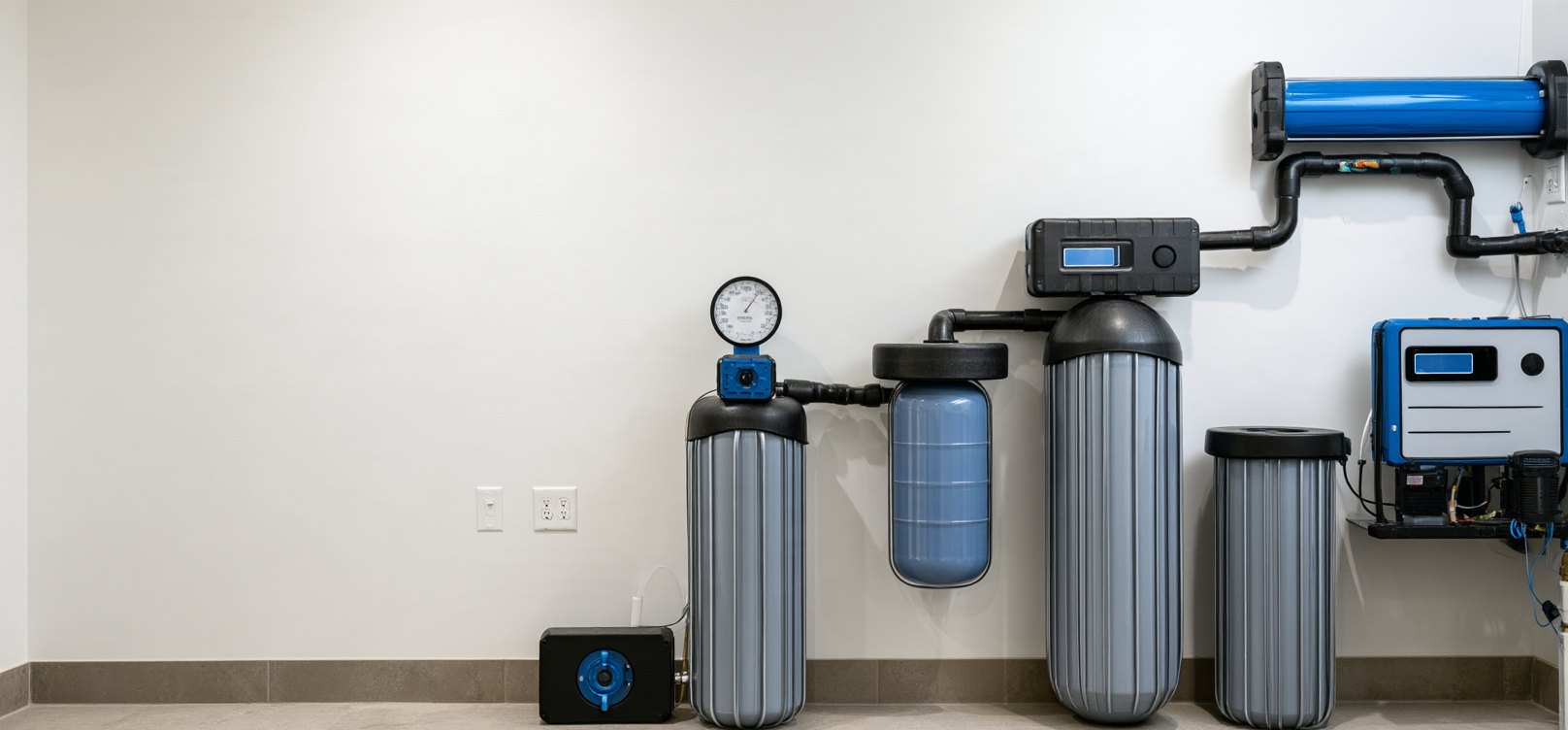
Well Systems
On a private well, nobody publishes a report for you. There is no annual notice, no state limit anyone is checking against, and no one to ring when the water changes. The test is the only record that exists.
Why us
Why well owners call us
Clean water at every tap
Water you can pour, cook with and hand a child without a second thought — and a lab panel on your own supply that shows it.
Clear answers, in writing
Every reading printed beside the Massachusetts or federal limit, with a plain verdict on each one, so you know exactly where your water stands.
The right system, first time
One system, designed around your readings and built in the order that makes it work — sized to your household, so it does the job for years.
Permits pulled, code met
Every town inspects a little differently. We know how yours works and build to Massachusetts plumbing code, so it passes first time and upgrades cleanly later.
A local team that stays
The people who fit your system are the people who come back to it — servicing and re-testing on whatever timetable you are comfortable with.
What the system is
How it is put together
A well system is not one box. It is a sequence, and the order decides whether it works — pH before iron, sediment before ultraviolet, oxidation before filtration. A correct list of equipment in the wrong order fails in about eighteen months and looks like a product fault.
Pick a stage to see what it does
Tap a stage to see what it does
- THE WELL
Short cycling kills pumps. Most wells we see have a tank that lost its charge years ago and nobody noticed.
Grit from the formation and the cloudiness that comes with it. This goes first, because everything downstream lasts longer once it is out.
South Shore well water often comes up acidic, and acidic water pulls copper and lead out of your own plumbing on the way to the tap. Neutralising media, sized to the draw.
Oxidation then filtration at the point of entry. Iron above 300 ppb and manganese above 50 ppb are the secondary standards that matter here.
Coliform is a private-well problem, and nobody publishes a report telling you that you have it. UV sized to peak flow, not to the box.
- THE HOUSE
Pressure tank & pump
Short cycling kills pumps. Most wells we see have a tank that lost its charge years ago and nobody noticed.
Sediment & turbidity
Grit from the formation and the cloudiness that comes with it. This goes first, because everything downstream lasts longer once it is out.
pH correction
South Shore well water often comes up acidic, and acidic water pulls copper and lead out of your own plumbing on the way to the tap. Neutralising media, sized to the draw.
Iron, manganese & sulphur
Oxidation then filtration at the point of entry. Iron above 300 ppb and manganese above 50 ppb are the secondary standards that matter here.
Ultraviolet disinfection
Coliform is a private-well problem, and nobody publishes a report telling you that you have it. UV sized to peak flow, not to the box.
Pricing
What it costs
All three on one bill over sixty months: $269 – $613 a month.
Test & Engineer
Assess & engineer water system
- A lab-conducted panel on your own water, billed at cost
- Every reading printed beside the Massachusetts or federal limit
- A recommended, engineered design for your system, drawn from your own readings
- The assessment and the design are free
- A plain verdict on each figure, yours to take elsewhere
Extended panels — PFAS6, arsenic, uranium, radon — run a further $150 to $400, billed at cost.
Install
Drill & install new systems
Replace & re-sequence systems
- The well drilled, cased and grouted, and the yield tested
- Submersible pump, pressure tank and the line trenched in
- Treatment sized to the readings from your own new well
- Permit pulled and fitted by a licensed plumber
- The MassDEP well completion report filed for you
Depth is what moves this number — South Shore wells run 80 to 250 feet through glacial till into bedrock. Hydrofracturing, if the yield comes up short, is $1,500 to $3,500 on top.
- We keep the tank, valving and pipework still doing its job
- Only the stages your readings actually call for are replaced
- Permit pulled and fitted by a licensed plumber
- A re-test once it is running, before and after on paper
- Re-sequenced if the existing order is what is failing
Treatment only — the well itself stays as it is. The range depends on how many stages are replaced, and how much of the existing plumbing we can keep.
Protect
Service & water retesting
- Filters, media, salt and ultraviolet lamps
- You set the frequency — one visit a year, two, or four
- A water test at any visit you choose to have one
- The year-on-year comparison, in writing
- The same local crew every time
Service frequency on your schedule. No contract, no minimums.
Your price is confirmed after the test and assessment — nothing here is a quote. The readings decide the system and the system decides the number, and you get it in writing, itemised and fixed, before any work starts. Ranges are illustrative, from published 2026 installed-cost data. Financing is available through Wisetack or Klarna, subject to credit approval; the monthly figures here are shown over sixty months.
Questions
What people ask us
What does a private well need?
A lab test first. Nobody publishes a report for a private well, so a panel on your own water is the only record there is. Ours is $250 and reads iron, manganese, hardness, pH and bacteria against Massachusetts and federal standards. Treatment is designed from those readings — typically $1,800 to $4,200 for an existing well.
How often should I test my well?
Bacteria once a year, and a full panel every three to five years or whenever the taste, smell or colour changes. Massachusetts has no statewide testing requirement for private wells once they are approved, though some towns require a test when a house is sold — so nobody reminds you. We can keep the calendar for you.
Why is my well water staining orange or black?
Orange and brown stains are iron; black specks are manganese. The secondary standards are 300 ppb for iron and 50 ppb for manganese, and South Shore wells regularly exceed both. The fix is oxidation then filtration at the point of entry, so the staining never reaches a fixture.
How much does well water treatment cost?
The lab panel is $250, and the assessment and design are free. Replacing or re-sequencing treatment on an existing well runs $1,800 to $4,200. A new well, drilled and fitted, runs $12,000 to $28,000, mostly depending on depth. Service and retesting is $400 to $600 a year.
Should I test my well for arsenic, uranium or PFAS?
In eastern Massachusetts, yes — bedrock wells here carry known arsenic and uranium risk, and PFAS has turned up in private wells across the state. An extended panel adds $150 to $400, billed at cost. We read PFAS against the Massachusetts standard of 20 ppt for six compounds combined.
Need a hand? Reach out.
Contact us →
Residential Water Solutions
A lab conducted water test is used as the basis for our assessment whether you are on town water or a private well. You get every reading in writing with the Massachusetts or federal standard beside it, and a straight answer about what you should do next.
How we work
Test.
Engineer.
Install.
Protect
Tap a step to see more
-
Numbers you can act on, not a sales pitch. The report is yours whether or not you go any further.
Book a water test → -
We read the results against your house — its age, its plumbing, what you actually draw — and set the stages in the order the chemistry requires.
-
In Massachusetts filtration, softeners and reverse osmosis are plumbing work. The paperwork is ours, not yours.
Talk to us about your install → -
The same panel on your water, before and after. Then again with each service visit, as often as you like.
Let us help you maintain your systems →
Learn more
Test
Numbers you can act on, not a sales pitch. A lab conducted water test, with the MassDEP or federal limit printed beside every reading — and it is yours whether or not you go any further.
Book a water test →Engineer
We read the results against your house — its age, its plumbing, what you actually draw — and recommend only what the readings call for, in the order the chemistry requires.
Install
Fitted on site by a licensed plumber, under a permit we pull. Massachusetts treats filtration, softeners and reverse osmosis as plumbing work with no exemption — so the paperwork is ours, not yours.
Talk to us about your install →Protect
We re-test your water once the system is in and put the before-and-after in your hands — the same panel, on your water, so you can see exactly what moved. Then again alongside the service check, conducted at any frequency you feel comfortable with.
Let us help you maintain your systems →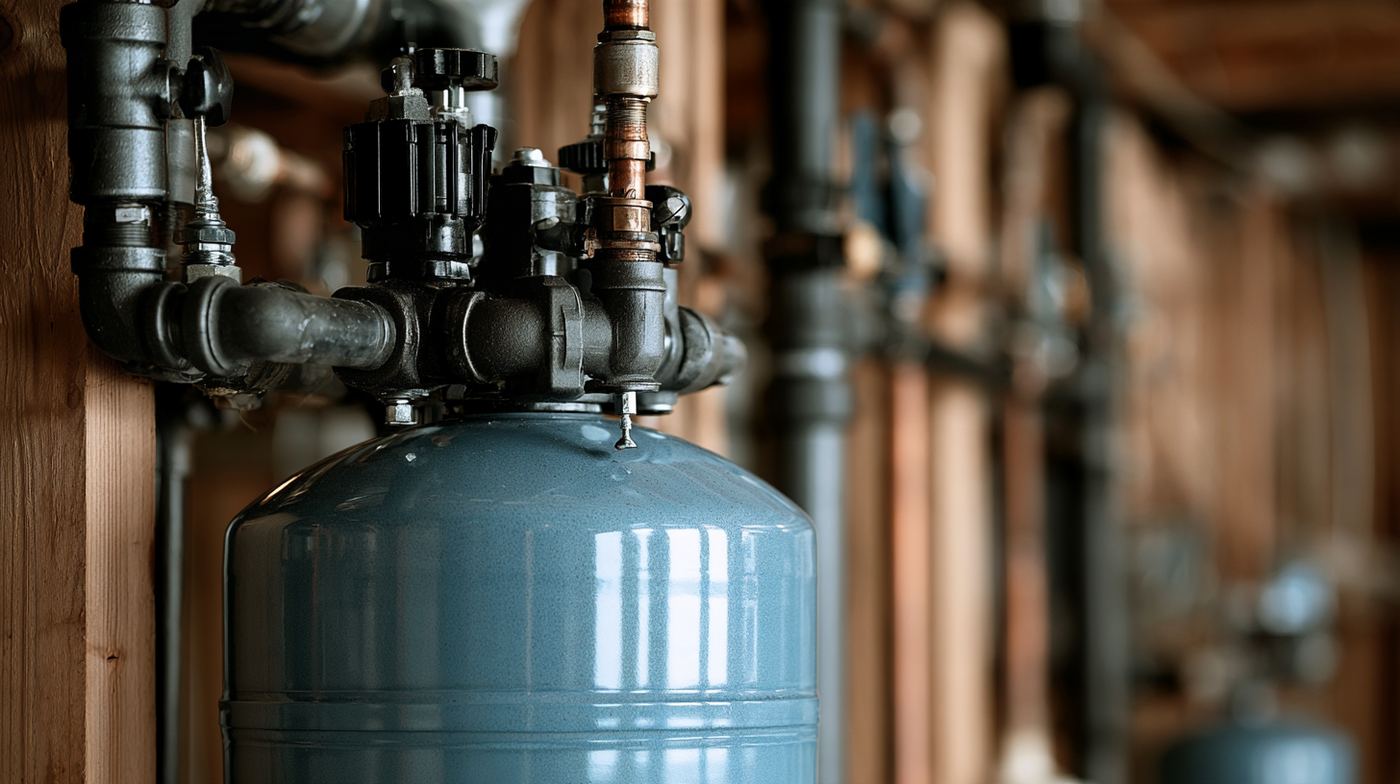
01
Well Systems
Clear, soft water at every tap in the house — no staining, no smell, no second-guessing a glass.
- Sediment and turbidity removal at the point of entry
- Iron, manganese and sulphur oxidation and filtration
- pH correction where the water comes up acidic
- Ultraviolet disinfection, sized to your flow rate
- Pressure tank and well pump troubleshooting
02
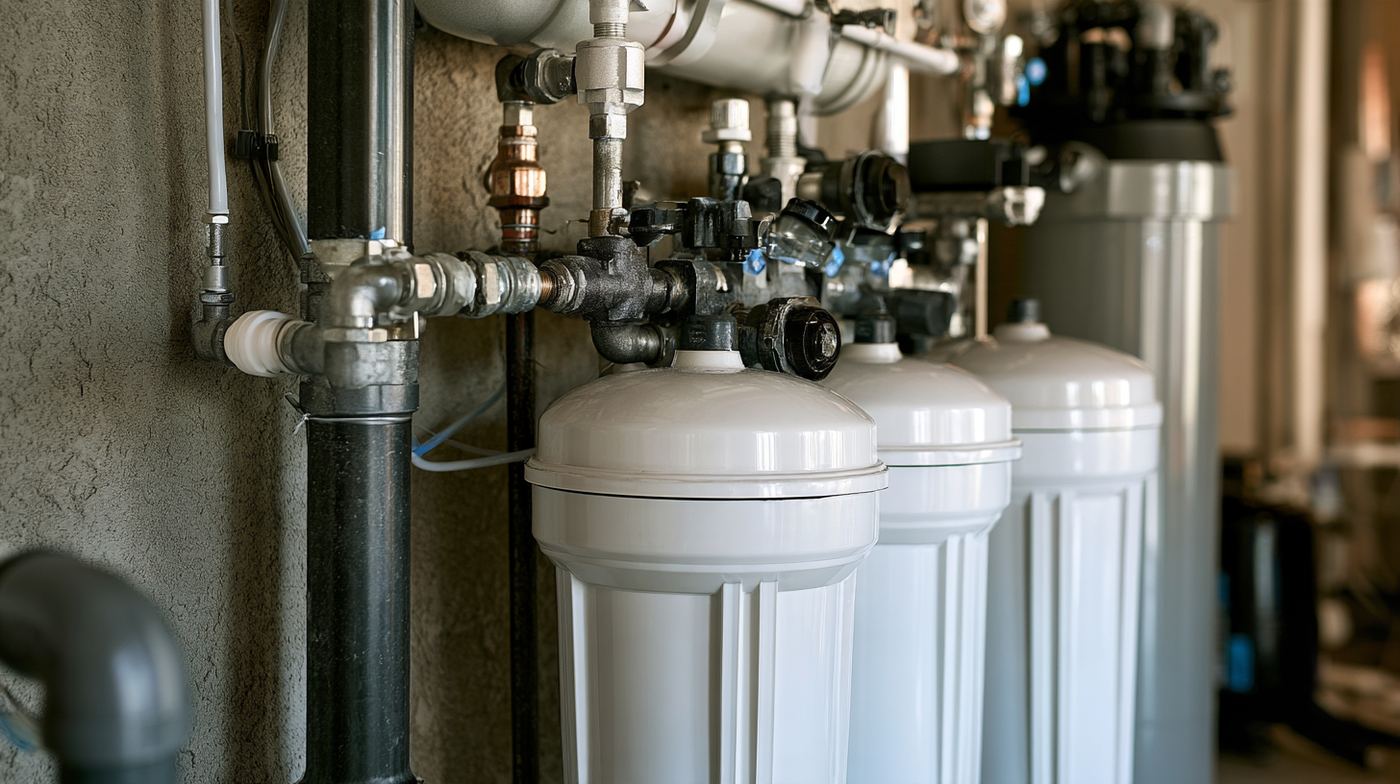
Whole Home Water Solutions
Better water at every fixture, not just the one you drink from — showers, laundry, appliances and all.
- Carbon filtration for chlorine, chloramine, taste and smell
- PFAS reduction media where the readings call for it
- Sediment pre-filtration to protect everything downstream
- Backwashing systems that clean themselves on a schedule
- Sized to the house so pressure never suffers
03
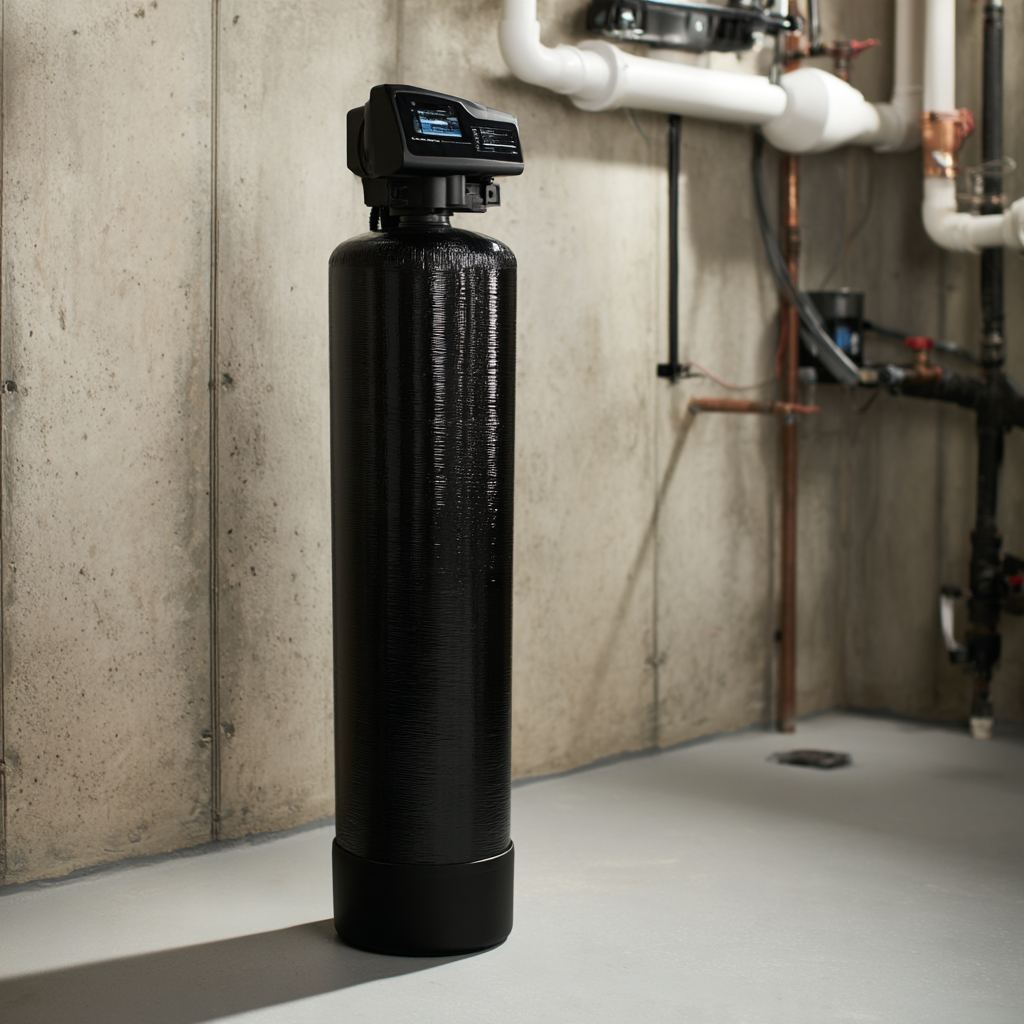
Water Softeners
Softer showers, spot-free glassware, and appliances that last the years you paid for.
- Ion-exchange softening sized to hardness and household draw
- Metered regeneration, so salt is used on demand not on a clock
- Salt-free conditioning where softening is not wanted
- Brine tank set-up and an annual salt and settings check
- Scale removed from heaters, boilers and fixtures
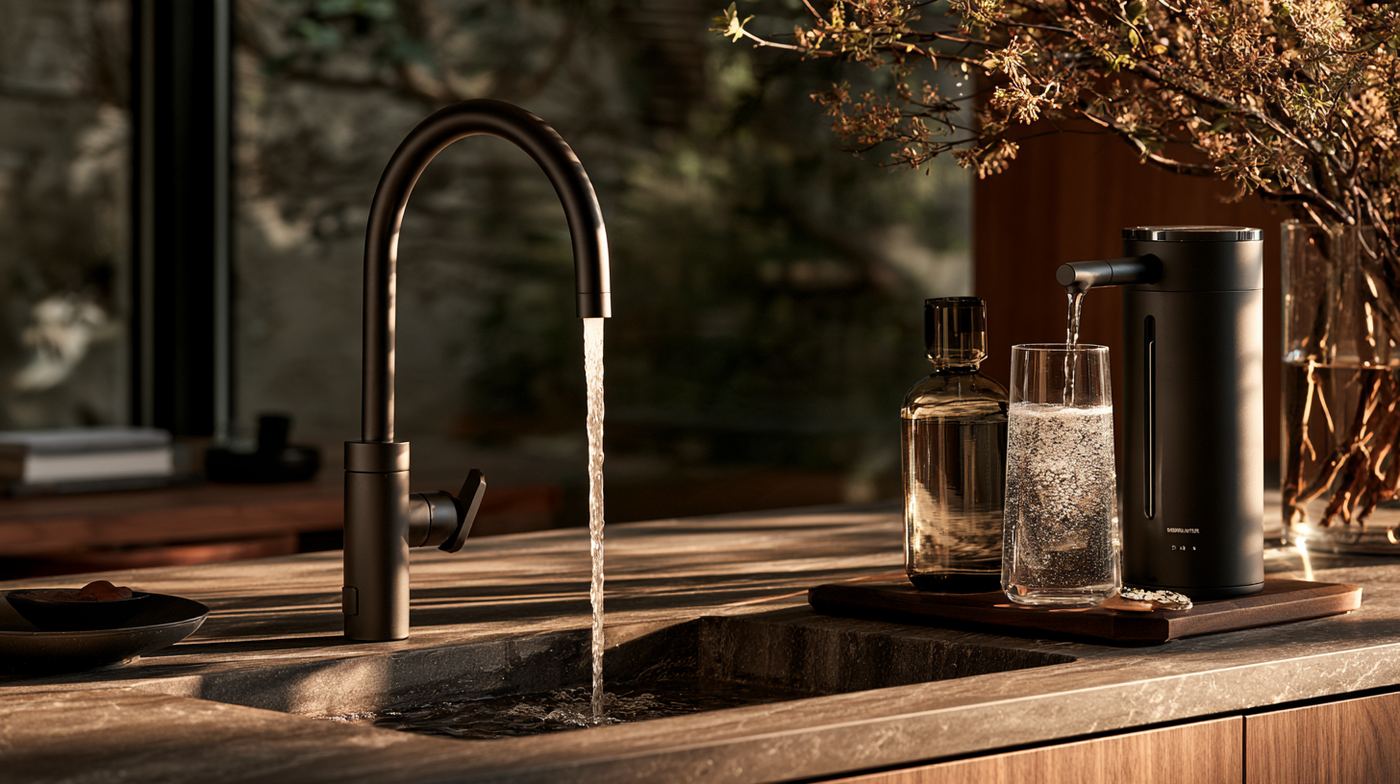
04
Drinking Water Systems
Water at the kitchen tap you would happily give a child — and, if you want it, chilled and sparkling on demand.
- Reverse osmosis under the sink, with remineralisation
- Dedicated filtered tap alongside the main faucet
- Chilled, ambient and sparkling dispensers plumbed in
- Whole-house RO where the supply calls for it
- Filter changes tracked and carried out for you
What we do
Trust, restored at every tap
Water you can trust starts here
Contact us →The Lab
What we read, so you don’t have to
Every town on the South Shore publishes what leaves its plant. Almost nobody reads it. This is where we keep what we find — the readings, the rules as they change, and plain explanations of what any of it means at your own tap. Useful whether or not you ever call us.
Businesses
Buildings where the water is part of the clinical outcome
Hospitals, surgery centres, long-term care, sterile processing and research labs all depend on water doing something specific — and all of them are accountable for it in ways an office building never is. We build and run the programme that keeps it defensible.
Where we work
Four settings, four different jobs for the same water
Hospitals & health systems
A documented water management programme: supply diagram, risk assessment, stagnation plan, control locations and acceptable ranges, monitoring, corrective action and an annual review. We author it, run it, and keep the evidence file survey-ready.
Sterile processing
ANSI/AAMI ST108:2023 turned water for reprocessing reusable devices from guidance into requirements. Device makers now tie warranty and instructions-for-use validity to conformant water, so this is enforced commercially long before any surveyor asks.
Ambulatory & long-term care
Surgery centres, nursing care centres and assisted living. Smaller estates, the same physics, and usually nobody whose actual job this is — which is precisely the role we are built to fill.
Research & laboratory
Reagent-grade water for instruments, glasswash and media prep. Purification systems drift quietly — resistivity and TOC move long before anyone notices a failed run — so we monitor to the grade the method actually requires.
The standards we work to
Current, correctly numbered, and read rather than quoted
This landscape moved recently and a lot of vendor material has not caught up. Here is where it actually stands as of September 2026.
| Standard | Status | What it asks of the facility |
|---|---|---|
| TJC PE.04.01.05 | Current | The hospital water management requirement, moved into the new Physical Environment chapter on 1 January 2026 under Accreditation 360. It asks for a named individual or team accountable for the programme, a documented plan, monitoring with acceptable ranges, corrective action and an annual review. Nursing care centres have been under this same number since 2022. |
| ASHRAE 188-2021 | Current | The Legionellosis risk management standard most programmes are written against. Building survey, hazard analysis, control measures, validation. |
| ASHRAE 514-2023 | Broader | Covers all microbial, chemical and physical hazards, with lower triggers — buildings of six storeys or more, occupants under 2 or over 65, surgical areas, long-term residential health services. It requires compliance with 188 rather than replacing it. Most of the market still writes to 188 alone. |
| ANSI/AAMI ST108:2023 | Current | The first US national standard for water used in processing reusable medical devices. Replaces the old TIR34 guidance with requirements, and is enforced through device manufacturers’ conditions rather than through surveys. |
What we will not tell you
That CMS requires Legionella cultures, or that a surveyor will cite you for your testing protocol. CMS has said plainly that it does not require water cultures for Legionella, that testing protocols are at the provider’s discretion, and that facilities are not to be cited on the basis of their risk assessments or testing protocols.
Fear sells badly to facilities directors, who generally know the material better than the rep in front of them. We would rather be the vendor whose standard numbers are right — including the ones that changed this year.
Local knowledge that changes the design
Treatment installed carelessly can make a hospital a public water system
Massachusetts DPH instructs public water suppliers to refer to MassDEP any facility that meets the definition of a public water system — and names installing permanent or temporary treatment as an example. A supplemental disinfection or secondary treatment install, structured badly, can pull a facility into MassDEP jurisdiction it never intended to enter.
We design around it, and where temporary secondary disinfection is genuinely needed we file it properly. It is the same regulatory ground we already stand on for small public water systems — which is why we notice it and a national chemical rep does not.
Massachusetts has no state Legionella regulation and no cooling tower registration requirement. The drivers here are federal and accreditation-based, not state.
What we do
The named accountable party your programme has to have
Every one of these standards puts the obligation on the facility, not the vendor. What they ask for first is somebody accountable — and in most buildings that person does not exist, or it is a facilities director carrying it on top of everything else.
-
01
Survey
The building as it is, not as the drawings say
Supply diagram from meter to fixture, dead legs, low-flow branches, temperature profile, storage and recirculation. Most findings are here, and most are cheap to fix once seen.
-
02
Plan
Written to the standard, sized to your estate
Hazard analysis, control locations with acceptable ranges, monitoring schedule, corrective actions and the annual review built in. Written so a surveyor can follow it and so your own staff can actually run it.
-
03
Operate
Routes, readings and remediation
Scheduled sampling and field measurement on a route, accredited analysis passed through at cost, remediation and flushing programmes, and treatment where the readings call for it — designed to keep you outside MassDEP jurisdiction.
-
04
Evidence
The file that answers the question
Every reading, every corrective action, every review, dated and retrievable. When a surveyor asks how you know the programme is working, the answer is a folder rather than a recollection.
Sterile processing gets one addition: an in-service for your SPD team, written for CRCST and CSPDT continuing-education credit. Your staff need the hours annually anyway, and the water conversation lands better as training than as a sales call.
Credentials and access
Ready to be let in the building
No credential is legally required to deliver water management services to a US hospital — every requirement lands on the facility. What actually decides whether a vendor can work is licensing, insurance and badging, so that is what we hold.
Vendor credentialing platform is set by each health system rather than by us. Mass General Brigham uses Green Security; others use symplr, GHX Vendormate or SEC3URE. We carry whichever the site requires, and our reps arrive badged, screened and immunised to the site’s current schedule.
| Item | Status |
|---|---|
| ASSE 12080 — Legionella Water Safety & Management Specialist | TODO |
| ASSE 12010 — Environment of Care / ICRA, field technicians | TODO |
| Massachusetts Master Plumber | TODO |
| MassDEP backflow tester & cross-connection surveyor | TODO |
| General liability | M / M |
| Excess / umbrella | M |
| Professional liability / E&O | M / M |
| Vendor credentialing | Per site |
Credential numbers and insurance certificates are placeholders in this prototype. Professional liability is listed deliberately: the moment a vendor authors a water management plan rather than supplying equipment, the exposure moves from product to professional advice, and it should be covered accordingly.
Water diagnostic
Find out what you need to measure
Three questions, about a minute. You get a shortlist of what is worth testing in a property like yours, on the supply you are on, built on MassDEP standards and South Shore geology. No email, no sign-up, and your answers carry into the booking so you never repeat yourself.
Start here · 60 seconds
Find out what you need to measure
Answer three questions and we’ll hand you a shortlist of what is worth testing in a property like yours, on the supply you are on. It is usually shorter than people expect.
- See your result straight away — no email, no sign-up.
- Built on MassDEP standards and South Shore geology, so it fits where you live.
- Your answers carry into the booking, so you never repeat yourself.
Where do you live, and where does your water come from?
Roughly when was the house built?
What are you noticing? Pick any that apply.
Here is what we’d measure first.
Think of this as where we would start. The test turns it into your actual numbers, and that is what we build a recommendation on.
The assessment
What we measure, and what each one buys you
Every parameter here earns its place: it is regulated in Massachusetts, characteristic of South Shore geology, or the reading that decides whether another treatment step will perform. Together they give you a complete picture in one visit.
Order matters, and getting it right is most of the value. pH is corrected before iron filtration goes in; sediment comes out before UV. We tell you what to do first and what can comfortably wait.
| Parameter | Standard | What the reading tells you |
|---|---|---|
| PFAS6 | 20 ppt | MassDEP sum-of-six. A tighter federal limit lands in 2029, so we measure against both and tell you where you sit for each. |
| Lead | 10 µg/L | The action level tightens in November 2027. A first-draw sample shows exactly what your own fixtures contribute, which is the number nobody else can give you. |
| Arsenic | 10 µg/L | A known risk in eastern Massachusetts bedrock. It has no taste and no color, so a lab result is how you settle it. |
| Uranium | 30 µg/L | Same bedrock, same story — and it is on our standard well panel, which is unusual. |
| Hardness | — | Not a health standard, but it is what most people are actually noticing — and it is the easiest thing here to fix well. |
| Iron & manganese | 0.3 / 0.05 mg/L | Staining and taste. Clearing these first is what keeps the rest of a system performing for years. |
| pH | 6.5 – 8.5 | Correcting pH protects your pipes and makes everything downstream work properly. It is straightforward and it goes first. |
| Coliform / E. coli | Absent | Private wells only. It is the first thing we run and the result we turn around fastest. |
Terms of use
The terms for using this website
Last updated 22 September 2026
This website is operated by Boston Water Group LLC, a Massachusetts company (“Boston Water Group”, “we”, “us”). By using bostonwatergroup.com you agree to these terms. If you do not agree to them, please do not use the site.
Information, not a diagnosis
What we publish here — town water readings, standards, explanations of treatment — is general information to help you understand your water. It is not a test of your water and not advice about your property. Only a laboratory test of the water at your own tap can tell you what is in it.
Published water data
Town readings are drawn from public sources such as annual water quality reports and state and federal databases, together with anonymised results of our own tests. We work to keep them accurate and current, but they can contain errors or be out of date. For your utility’s official figures, contact your water supplier.
Prices
Prices on this site are ranges, built from published installed-cost data and our own experience. They are not quotes. Your price is confirmed in writing, itemised and fixed, after the test and assessment and before any work starts.
Financing
Where monthly figures are shown, financing is provided by third parties such as Wisetack and Klarna, subject to their own terms and to credit approval. Boston Water Group is not a lender.
Our work
Any testing, installation or service we carry out is governed by the written agreement you sign with us for that job, and by the licences and permits that work requires. Those terms, not these website terms, govern the work itself.
Using the site
You may use the site for your own information. Please do not copy it wholesale, attempt to disrupt it, or use it for anything unlawful. The text, design, maps and photographs are owned by Boston Water Group or its licensors.
Links to other sites
Where we link to another website, such as a regulator or a data source, we are not responsible for its content.
Your information
What we collect through this site, and how we handle it, is set out in our privacy policy.
Liability
The site is provided as it is, without warranties of any kind. To the extent the law allows, we are not liable for any loss arising from reliance on its general information. Nothing in these terms limits rights you have as a consumer under Massachusetts law.
Law and changes
These terms are governed by the laws of the Commonwealth of Massachusetts, and any dispute belongs in the state or federal courts sitting in Massachusetts. We may update these terms; the date above shows when they last changed.
Contact us
Questions about these terms: hello@bostonwatergroup.com.
Privacy
How we handle your information
Last updated 22 September 2026
Boston Water Group understands the importance of your privacy and the careful use of your information. We value the trust you place in us to handle your data responsibly. This notice sets out our privacy policy. By using bostonwatergroup.com, you agree to the practices described here.
This notice applies to information collected by this website and by the work we carry out for you. It tells you:
- what information is collected from you, how it is used and with whom it may be shared;
- what choices are available to you regarding the use of your data;
- the security measures in place to protect against the misuse of your information;
- how you can correct any inaccuracies in that information.
Information collection, use and sharing
We collect two kinds of information: personal data, which on its own or combined can identify you — your name, phone number, address and email address — and non-identifying information about how the site is used.
Personal data is collected when you give it to us. When you request a consultation we collect your name, email address, phone number, the town or address concerned, whether it is a home or a business, the times that suit you, and anything you choose to tell us about your water. When you email us we receive your message and anything you attach, such as a photograph or an earlier test report. When we test your water we record the property address, the sample details and the laboratory results.
Submitting a request also opts you in to occasional email from us about our services and what we are finding in local water. You can unsubscribe at any time, and every email we send carries a way to do it.
Our hosting provider automatically logs information about your visit that does not identify you personally: your IP address, browser type, device make and model, the page that referred you, the pages you view on the site and any search terms.
We use your information to reply to you, arrange and carry out the visit, report your results, design, quote, install and service a system, and keep the records the work requires. We do not sell or rent your personal information, and we do not share it for advertising.
Who else sees it
Only the service providers that help us run the business: our website host, our email delivery provider, the certified laboratory that analyses your sample and, if you apply for it, the financing company you choose. Each sees only what it needs for that purpose. We may also disclose information where the law requires it.
Anonymised water data
We publish water readings by town so your neighbours have a head start. Before any result is published it is anonymised and combined with others: no name, no address and nothing that identifies your home is ever shown.
Your access to and control over information
You may opt out of future contact from us at any time. By emailing hello@bostonwatergroup.com you can at any time:
- see what data we hold about you, if any;
- change or correct any data we hold about you;
- have us delete any data we hold about you, where we are not required to keep it;
- raise any concern about our use of your data.
Data security
We take precautions to protect your information, online and offline. Only the people who need it to do a particular job — answering you, testing your water, carrying out the work — are given access to personal information, and it is held in a secure environment. We handle it in line with the Massachusetts data security regulations, and we will tell you if a breach affects you.
We use commercially reasonable technical and organisational measures to safeguard the data in our possession. No transmission over the internet is completely secure and no security mechanism is impenetrable, so while we take these steps we cannot guarantee the security of data sent to us or held on our servers.
Cookies
This site does not use advertising or tracking cookies. If we add analytics to understand how the site is used, we will update this page before we do.
How long we keep it
Enquiries that do not become a job are deleted within two years. Records of work, tests and service are kept for as long as we look after your system, and for as long as the law requires after that.
Transfer of collected data
This site is operated in the United States. If you are elsewhere, the data we collect will be transferred to, stored and processed in the United States, where privacy laws may not be as comprehensive as those where you live. By using the site or giving us your data you consent to that transfer, and we take the steps reasonably necessary to keep it secure and handled as described here.
Children
This site is not directed at children, and we do not knowingly collect information from anyone under 13.
Contact us
For any question or request about your data, email hello@bostonwatergroup.com. Changes to, or removal of, your contact information may take seven to ten working days to take effect.
Accessibility
A site everyone can use
Last updated 22 September 2026
We want everyone to be able to find out what is in their water. We aim for this site to meet the Web Content Accessibility Guidelines (WCAG) 2.1 at level AA.
What we have done
- Every page can be used with a keyboard, with a visible focus marker.
- Text and controls are built to meet WCAG colour contrast ratios.
- Photographs that carry meaning have text descriptions; decorative ones are hidden from screen readers.
- Animation and auto-advancing carousels stop when your device is set to reduce motion, and stop as soon as you interact with them.
- System diagrams are also given as a plain list of stages, and every stage can be opened to read what it does.
Known limitations
The town map is a visual tool. The same town information can be reached by typing your town into the search box above the map. We are working to make the map itself fully usable with a screen reader.
Tell us about a problem
If anything on this site is hard to use, or you need information in another format, email hello@bostonwatergroup.com. A person will reply within two working days, and we will get you the information another way while we fix it.